
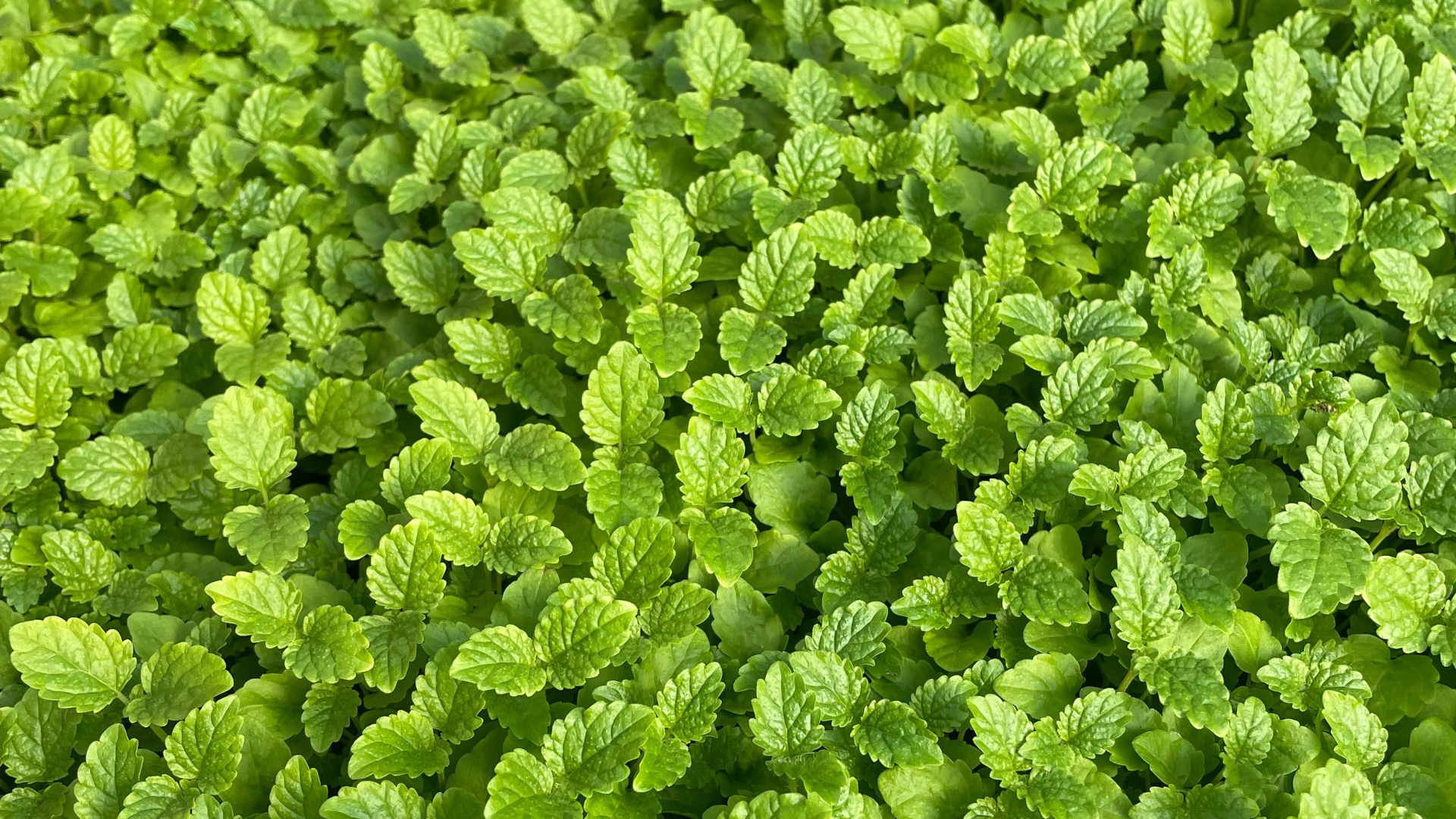
Melisse rewards patience and careful moisture management. Its small seeds and delicate young seedlings require a gentler approach than many larger-seeded microgreen varieties.
- The Light Trigger: Lemon Balm seeds are very small and should not be deeply buried. Sow them onto the surface of a moist growing medium, gently press them down to establish good contact, and expose them to light during germination rather than covering them beneath a thick layer of substrate.
- The Gentle Moisture Rule: Because the seed sits close to the surface, it can dry out quickly during establishment. Maintain consistent humidity and moisture without saturating the growing medium. Gentle misting during the earliest stage can help prevent the seed from being displaced.
- The Citrus Cooler: Excessively warm growing conditions can encourage soft, stretched growth. Moderate temperatures combined with good light help produce compact foliage while maintaining the fresh aromatic character that makes Lemon Balm so distinctive.
- The Dry Leaf Finish: As harvest approaches, avoid leaving excessive moisture on the foliage. Good airflow and careful watering help deliver a cleaner, firmer crop and reduce the risk of damage during harvesting and packing.
Culinary Uses of Lemon Balm
Lemon Balm offers an unusual opportunity to introduce citrus freshness without actually adding citrus fruit.
- Its fresh lemon aroma makes it particularly well suited to desserts, cakes, berries, sorbets, and other sweet creations.
- In mixology, it can provide a fragrant finishing touch to cocktails, botanical drinks, lemonades, and alcohol-free creations.
- Its subtle character also pairs beautifully with seafood and delicate dishes where stronger herbs might overpower the main ingredients.





Einen Kommentar hinterlassen