
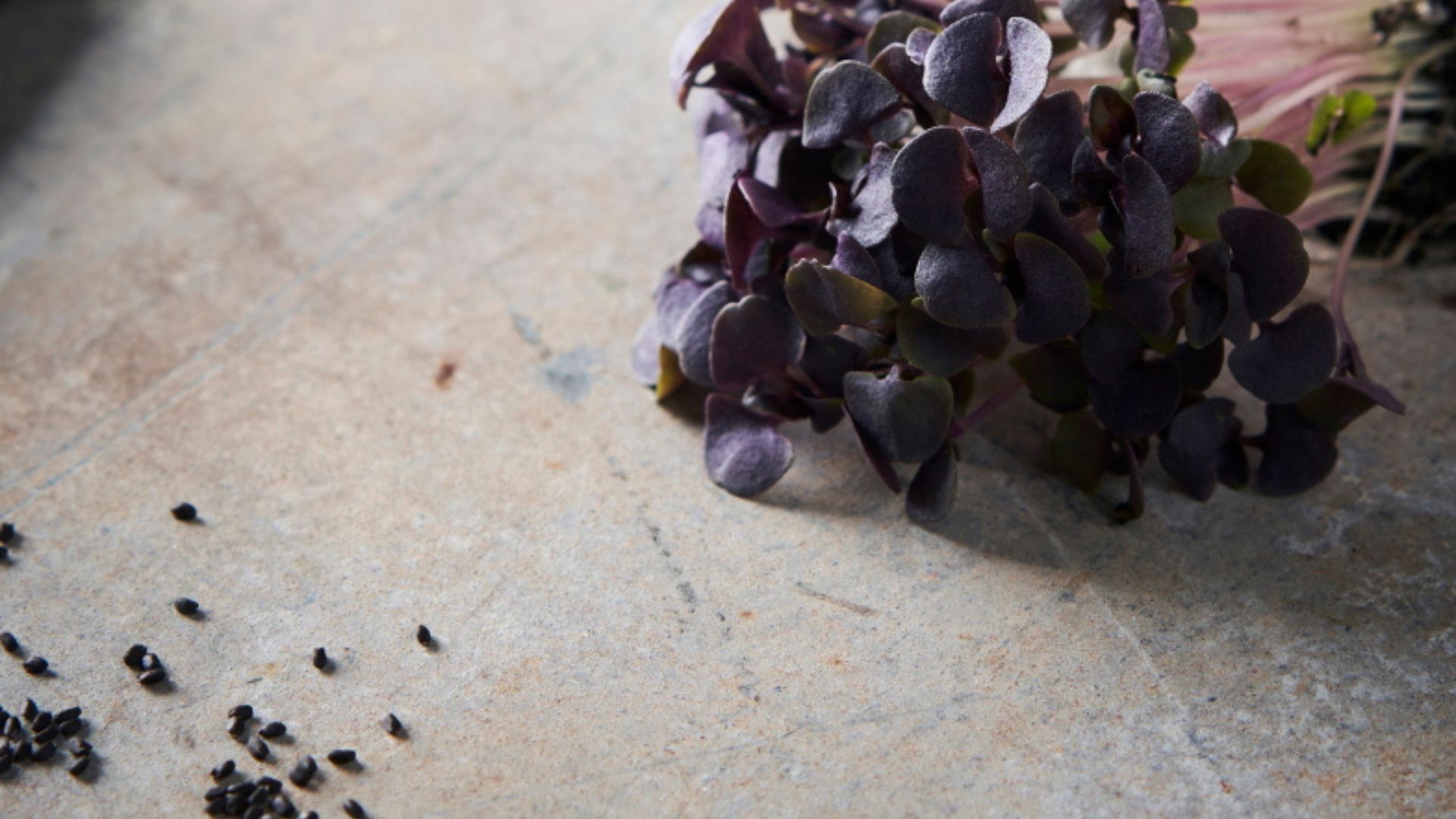
Basil Red Rubin (Ocimum basilicum) is a premium variety specifically selected for its consistent, deep-purple colour and robust aroma. For the home grower, it offers a striking metallic-purple aesthetic and a concentrated flavour featuring distinct notes of clove and pepper. While Red Rubin requires slightly more precise care than standard varieties like cress or radish, the high-quality result makes it a rewarding addition to any windowsill or indoor garden.
5 Tips for a Professional Harvest
Basil Red Rubin is a more delicate crop than your standard radish or cress, to achieve a healthy, vibrant crop, we recommend following these five practical steps:
-
Maintain Consistent Warmth: Basil is a tropical herb that requires a steady temperature between 24°C and 27°C. If the environment is too cool, the seeds may remain dormant or become prone to rot before they have a chance to sprout.
-
Light is Vital for Sprouting: Red Rubin seeds need light to trigger germination. Simply press the seeds firmly into the surface of your moist compost to ensure good contact, but do not cover them with a layer of soil.
-
Ensure Plenty of Airflow: When wet, basil seeds develop a thin, jelly-like coating that can trap moisture and encourage mould. Keeping a window slightly open or using a small fan ensures the air stays fresh and the stems remain healthy.
-
Be Patient with the Growth: Unlike faster superfood greens, Red Rubin takes a little longer to mature. For the best colour and flavour, aim to harvest your greens between day 12 and 16 once the first leaves are fully open.
-
Protect from the Cold: This variety is very sensitive to the cold. To prevent the delicate purple leaves from bruising or turning black, harvest them at room temperature and avoid placing them in the fridge.
How to Use Your Red Rubin
The concentrated flavour of Red Rubin makes it a versatile ingredient for balancing a variety of dishes.
-
Savoury Contrast: Its spicy, clove-like notes provide an excellent contrast to creamy textures, such as mozzarella, avocado, or pasta dishes.
-
Asian-Style Dishes: The earthy profile works perfectly with ginger, soy, and lime, offering a sophisticated alternative to standard green basil.
-
Striking Garnishes: The deep purple hue provides a professional finish when sprinkled over light-coloured soups, grilled fish, or fresh summer salads.
Ready to start your crop?




Laisser un commentaire